New space,
strange constraints
strange constraints
First hack-a-thon!
July 2025
6 minute read
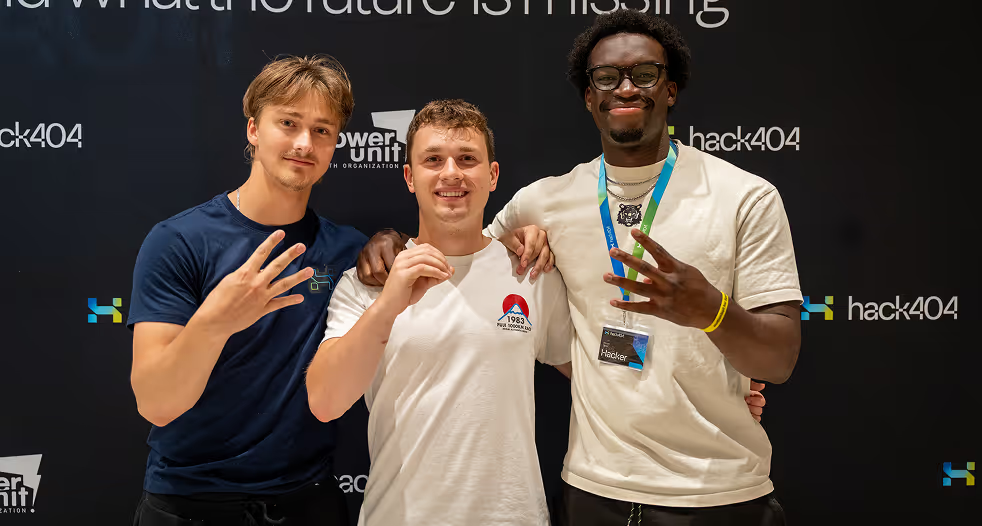
Every hackathon starts with chaos and caffeine, but this one started with something real. One of my teammates shared that his grandmother has Parkinsons. Hearing how it affected her daily life and how it placed pressure on her daughter who is a caregiver changed the energy of our brainstorm. It was not just a prompt anymore. It was a person. It was a family. We had someone specific in mind and that made every decision sharper.
People with Parkinsons navigate a lot of uncertainty. Symptoms fluctuate throughout the day. Tremors can vary wildly. Caregivers and doctors have to rely on vague descriptions like “today felt worse than yesterday” during checkups. This makes it difficult to track changes over time or understand how medication is actually working.
We wanted to turn that ambiguity into something concrete. Something measurable. Something simple enough for an older user to use without frustration.
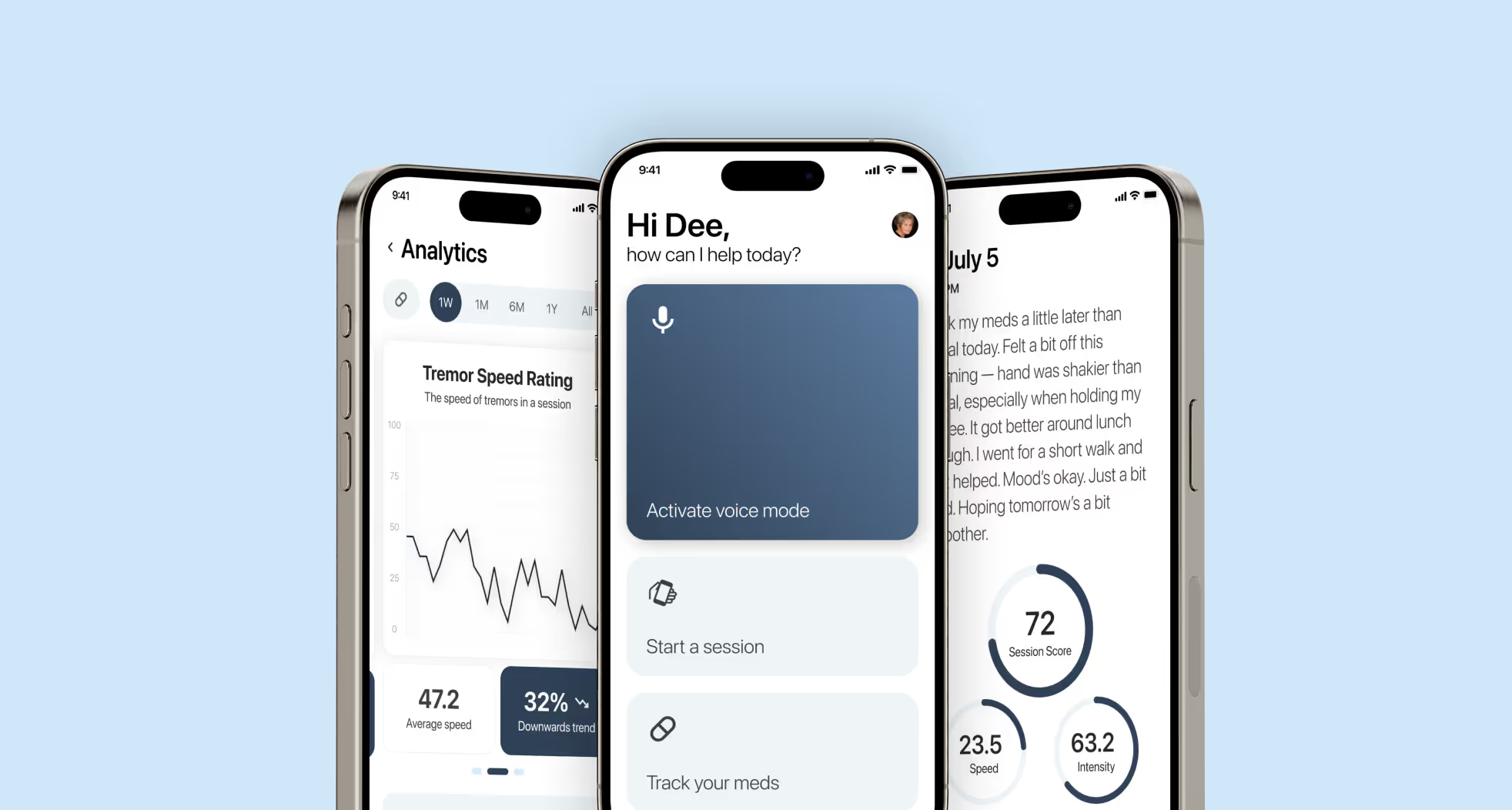
So we built Steady. A tool that uses the phone accelerometer to measure tremor frequency and amplitude. It gives users real numbers that show how severe their tremors are and how fast they are happening. No guesswork. No vague explanations. Just data they can bring to their next appointment.
People with Parkinsons navigate a lot of uncertainty. Symptoms fluctuate throughout the day. Tremors can vary wildly. Caregivers and doctors have to rely on vague descriptions like “today felt worse than yesterday” during checkups. This makes it difficult to track changes over time or understand how medication is actually working.
We wanted to turn that ambiguity into something concrete. Something measurable. Something simple enough for an older user to use without frustration.
So we built Steady. A tool that uses the phone accelerometer to measure tremor frequency and amplitude. It gives users real numbers that show how severe their tremors are and how fast they are happening. No guesswork. No vague explanations. Just data they can bring to their next appointment.
The accelerometer tracking was cool, but the real game changer was Whisper. Parkinsons affects motor control, so tapping tiny buttons and navigating complex interfaces is not ideal. Voice became the perfect solution.
We made the entire app navigable with a single tap. Turn on voice mode and say what you need. You can say something like “I took thirty milligrams of levodopa and I did not feel great, let me run a tremor test” and Whisper will parse the whole thing. It pulls out the medication update, starts the tremor test, and logs everything without forcing the user to jump between screens.
That moment when Whisper understood a messy, natural sentence and turned it into structured actions was my aha moment. It felt like the kind of tech people will expect in a few years. Simple. Invisible. Human.
Since this was a hackathon, I handled the full UI and worked closely with my team to bring it to life. I created the flows, designed the interface, and shaped the overall interaction model. I also helped with the research and presentation, but my main job was making sure the product made sense visually and functionally.
Design choices hit way harder when you know exactly who you are designing for. Every type size, every layout choice, every interaction had a literal reason. We were designing for an older group, so certain things became non negotiable.
I pushed text sizes up to improve readability.
I kept spacing generous to reduce accidental taps.
I chose color combinations that passed AAA contrast standards because anything less would not serve our users.
I removed visual clutter to keep cognitive load low.
I made sure the core actions are huge and impossible to miss.
I wrote labels that sound like someone is guiding you, not a robot.
There was no moment where I chose something because it looked cool. It all tied back to one real person who needed the app to feel calm, clear, and safe to use.
We made the entire app navigable with a single tap. Turn on voice mode and say what you need. You can say something like “I took thirty milligrams of levodopa and I did not feel great, let me run a tremor test” and Whisper will parse the whole thing. It pulls out the medication update, starts the tremor test, and logs everything without forcing the user to jump between screens.
That moment when Whisper understood a messy, natural sentence and turned it into structured actions was my aha moment. It felt like the kind of tech people will expect in a few years. Simple. Invisible. Human.
Since this was a hackathon, I handled the full UI and worked closely with my team to bring it to life. I created the flows, designed the interface, and shaped the overall interaction model. I also helped with the research and presentation, but my main job was making sure the product made sense visually and functionally.
Design choices hit way harder when you know exactly who you are designing for. Every type size, every layout choice, every interaction had a literal reason. We were designing for an older group, so certain things became non negotiable.
I pushed text sizes up to improve readability.
I kept spacing generous to reduce accidental taps.
I chose color combinations that passed AAA contrast standards because anything less would not serve our users.
I removed visual clutter to keep cognitive load low.
I made sure the core actions are huge and impossible to miss.
I wrote labels that sound like someone is guiding you, not a robot.
There was no moment where I chose something because it looked cool. It all tied back to one real person who needed the app to feel calm, clear, and safe to use.
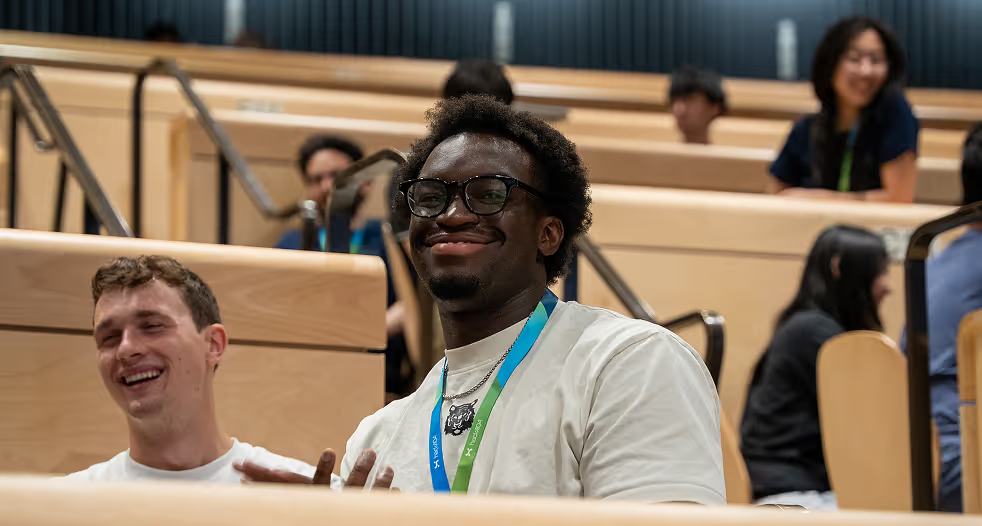
Building Steady Path completely shifted how I think about accessibility and the future of interaction. Designing for one real user forced me to defend every pixel and every decision. Nothing was random. Nothing was cute for the sake of being cute. It taught me that accessibility is not a constraint. It is clarity. It is intention.And working with Whisper made me realize how powerful conversational technology will become. Interfaces will start to disappear. People will interact with products the same way they interact with other people. That is the reality we got a taste of at Hack404 and I want to keep exploring it.
Thank you.
Check out some more stories to let me yap!