The price of winning
How my first design-a-thon showed me the importance of a thoughtful story
June 2025
5 minute read
My first ever designathon was not supposed to be dramatic. I showed up thinking I would vibe with my team, build something cool, and learn a thing or two. Instead, it turned into a full plot twist.
The challenge was to help Co operators gather sales leads and identify new opportunities across property and casualty and advice based services. We had to think across digital platforms, digital marketing, and even offline channels. Basically, how do you connect with people in a way that feels natural instead of forced.
Our original idea felt fine on paper, but something about it was not sitting right with me. It felt like one of those ideas that tries to be everything and ends up being nothing. The classic hackathon trap. You have a prompt, so you scramble to make an app because that is the default move.
But the truth is that nobody wants another random app unless it is unreal. It needs to be so good that people want to carve space for it in their daily workflow. Our idea did not feel like that.
We had a full week to work. We had a team that seemed solid. Then, the morning of the presentation, two team members bailed. One fully disappeared. Gone. I was suddenly the main storyteller with one teammate beside me who later on supported with a few screens.
It was my first designathon ever and suddenly I was carrying the full thing.
Rather than forcing our original idea, I made the call. We scrapped it. Completely. Right there on the day of.
I pulled our mentor aside and we ran a full whiteboard session for almost two hours. No slides. No UI. Just thinking. Breaking the prompt down. Asking real questions.
The challenge was to help Co operators gather sales leads and identify new opportunities across property and casualty and advice based services. We had to think across digital platforms, digital marketing, and even offline channels. Basically, how do you connect with people in a way that feels natural instead of forced.
Our original idea felt fine on paper, but something about it was not sitting right with me. It felt like one of those ideas that tries to be everything and ends up being nothing. The classic hackathon trap. You have a prompt, so you scramble to make an app because that is the default move.
But the truth is that nobody wants another random app unless it is unreal. It needs to be so good that people want to carve space for it in their daily workflow. Our idea did not feel like that.
We had a full week to work. We had a team that seemed solid. Then, the morning of the presentation, two team members bailed. One fully disappeared. Gone. I was suddenly the main storyteller with one teammate beside me who later on supported with a few screens.
It was my first designathon ever and suddenly I was carrying the full thing.
Rather than forcing our original idea, I made the call. We scrapped it. Completely. Right there on the day of.
I pulled our mentor aside and we ran a full whiteboard session for almost two hours. No slides. No UI. Just thinking. Breaking the prompt down. Asking real questions.

We ended up rebuilding our entire concept in a single morning. The new idea focused on connecting rather than forcing people to download another tool they did not want. We created a referral system called Co Connect that meets users where they already are. The gym. Run clubs. Book clubs. Study sessions. Everyday life.
Instead of pushing a whole app, we used simple referral flows and a conversational AI on the website that humanizes the insurance experience. The goal was simple. Make it easy for people who know nothing about insurance to ask real questions and understand what they might need.
The solution itself was not the star. What mattered was the clarity. The story. The way it all made sense from start to finish.
This is the moment everything clicked. I realized that designathons are not a screen contest. They are a storytelling contest. You can have the cleanest UI on the planet, but if the judges cannot follow the logic behind your idea, it's wraps. So I built the narrative around one fictional user. Someone who is confused about insurance. Someone who trusts their friends more than a company. Someone who would not download another app but would talk to an AI if it felt natural and friendly.That story carried the whole presentation. It grounded everything we built. It allowed the judges to picture the product in real life.
Instead of pushing a whole app, we used simple referral flows and a conversational AI on the website that humanizes the insurance experience. The goal was simple. Make it easy for people who know nothing about insurance to ask real questions and understand what they might need.
The solution itself was not the star. What mattered was the clarity. The story. The way it all made sense from start to finish.
This is the moment everything clicked. I realized that designathons are not a screen contest. They are a storytelling contest. You can have the cleanest UI on the planet, but if the judges cannot follow the logic behind your idea, it's wraps. So I built the narrative around one fictional user. Someone who is confused about insurance. Someone who trusts their friends more than a company. Someone who would not download another app but would talk to an AI if it felt natural and friendly.That story carried the whole presentation. It grounded everything we built. It allowed the judges to picture the product in real life.
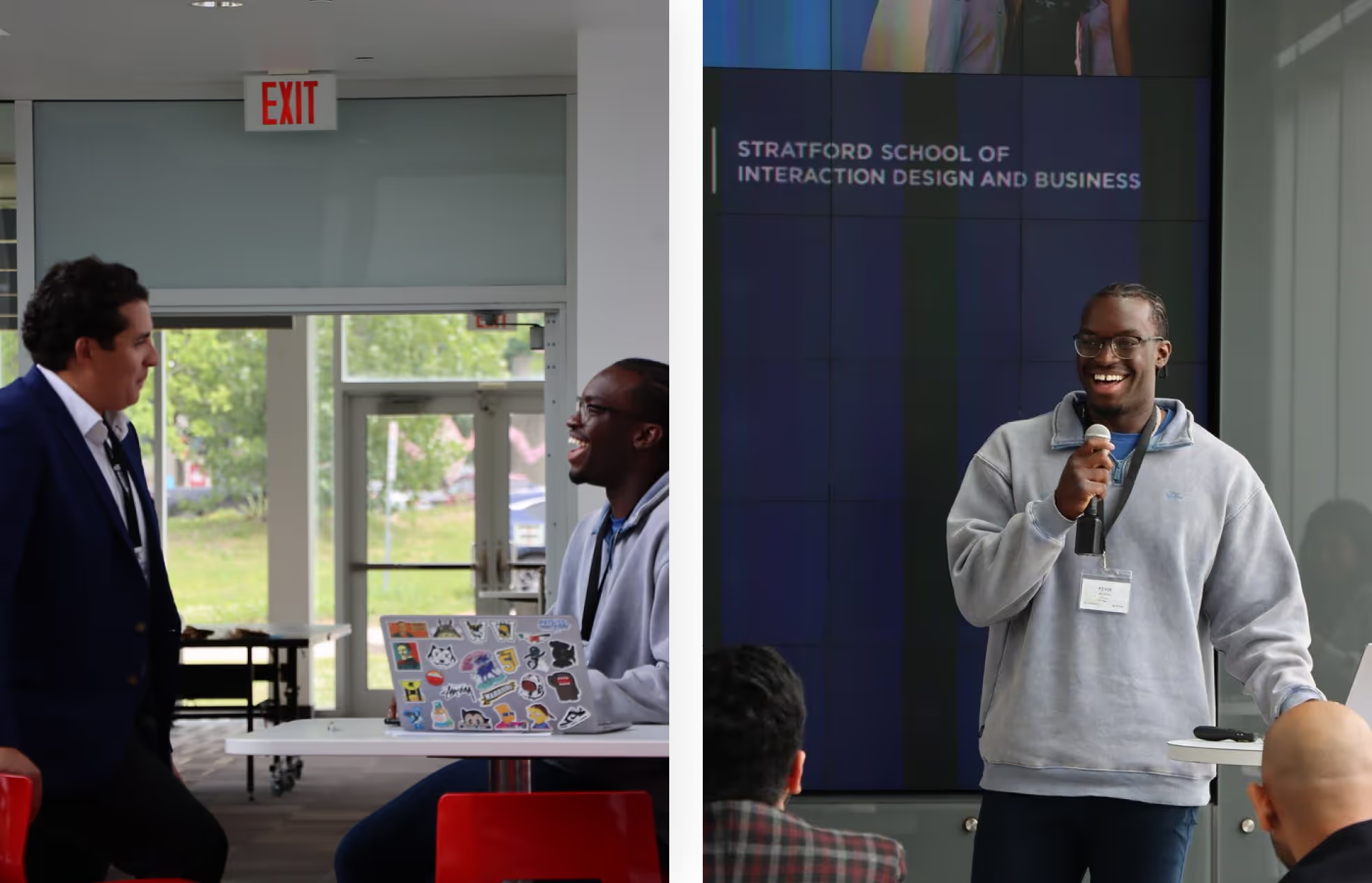
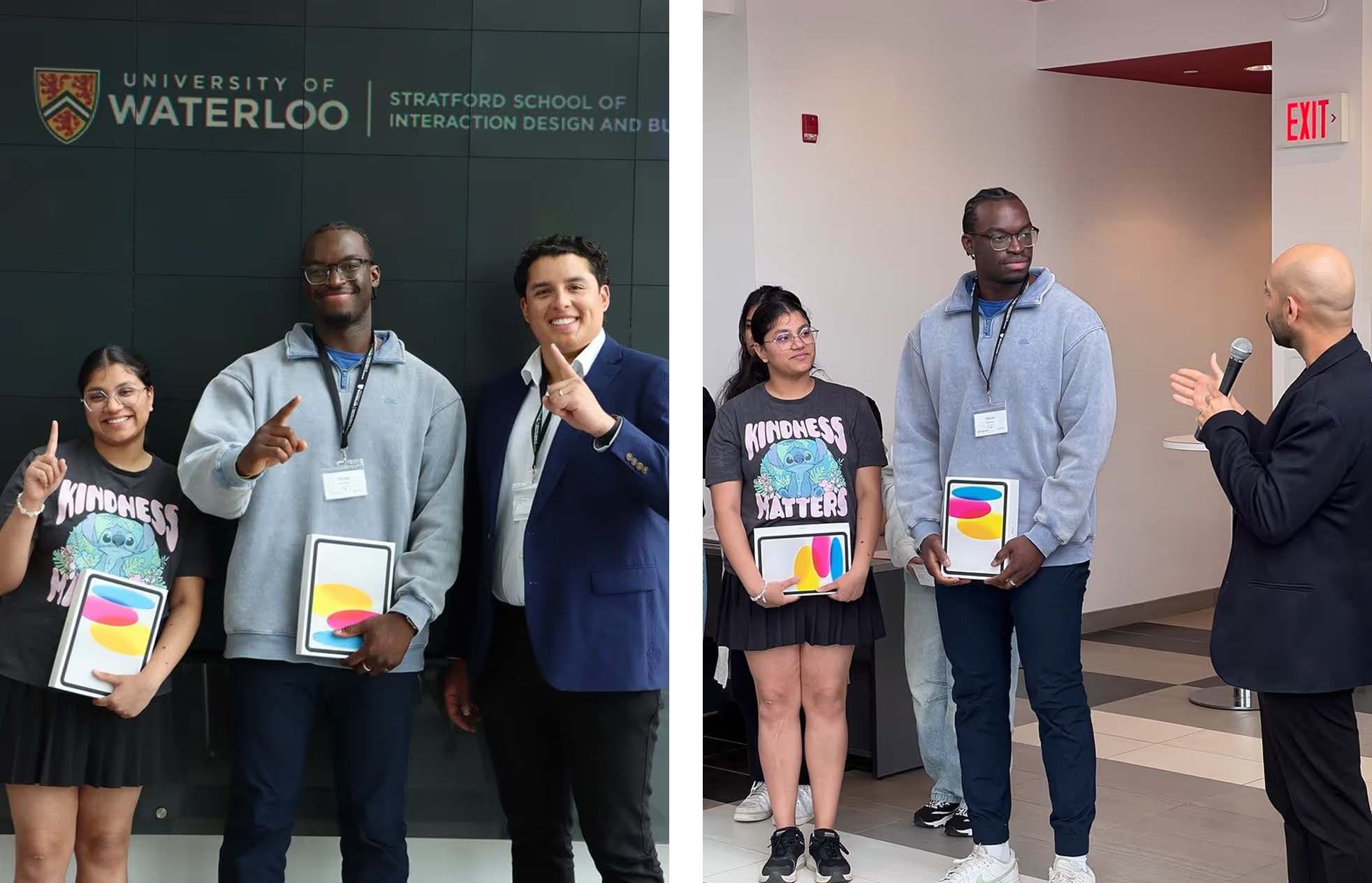
When it came time to present, it was just me. I walked through the narrative, showed the screens we had, and let the story do the work. And it worked. We won.
This designathon taught me something I honestly needed to learn early.
Good design is clarity.
Good design is making a room care.
Good design is storytelling.
The screens matter, but the story is what makes everything make sense. And sometimes the bravest design move is knowing when to throw away the idea you spent a week on and rebuild something that is actually true to the problem.I walked in nervous and walked out understanding that design is less about perfection and more about guiding people from confusion to understanding. That is the skill I want to keep sharpening.
This designathon taught me something I honestly needed to learn early.
Good design is clarity.
Good design is making a room care.
Good design is storytelling.
The screens matter, but the story is what makes everything make sense. And sometimes the bravest design move is knowing when to throw away the idea you spent a week on and rebuild something that is actually true to the problem.I walked in nervous and walked out understanding that design is less about perfection and more about guiding people from confusion to understanding. That is the skill I want to keep sharpening.
Thank you.
Check out some more stories to let me yap!